






The world’s most-watched online children’s series is getting its first feature film, with its original creator in charge and a 2028 target. This is either a global blockbuster in the making or a cautionary tale about the gap between YouTube fame and theatrical success.
Ask a parent with young children in Russia, Eastern Europe, or much of Asia what their kids watch obsessively, and there’s a reasonable chance they’ll say Masha and the Bear before they say anything else.
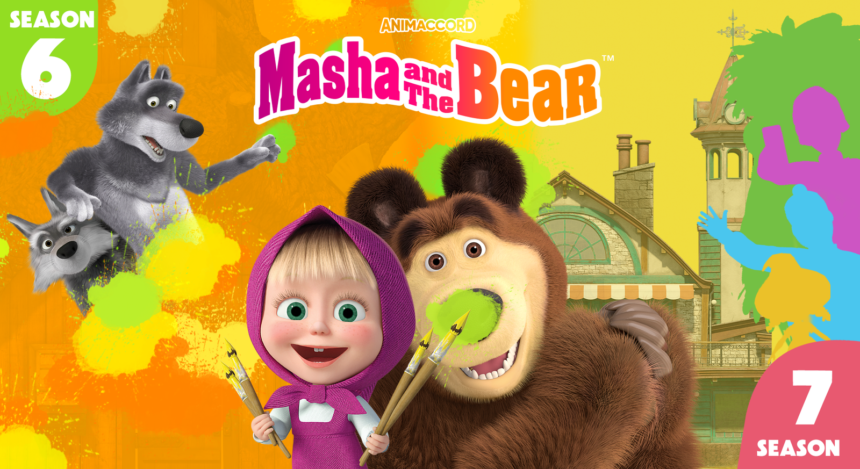
The Russian animated series — created by Oleg Kuzovkov in 2008 — follows the misadventures of a small, relentlessly energetic girl named Masha and her long-suffering bear companion. It is, to Western audiences who haven’t encountered it, roughly analogous to a more chaotic, less moralistic version of something between Peppa Pig and Tom and Jerry. It is, to everyone who has encountered it, inescapable.
One episode alone — Recipe for Disaster, in which Masha’s porridge-making goes catastrophically wrong — has accumulated 4.6 billion views on YouTube. Not streams. Views. The kind that count every rewatch, every kid who hit play again at 3 a.m., every parent who let the algorithm run because it bought them twenty minutes of quiet. No non-music video in the history of the platform has more. The episode crossed 4 billion before Netflix’s most-watched original films had reached half that combined.
And yet there has never been a theatrical feature film.
Until now. Or, more precisely: until 2028.

Kuzovkov has launched Studio MiM — headquartered in both Los Angeles and Moscow — specifically to produce the first original Masha and the Bear feature film and its sequels. The key word is “original”: this is not a project handed to him by Animaccord, the studio he founded and subsequently became estranged from as the IP grew beyond any individual’s control. He has reclaimed his characters via license expiration and is starting over with a new creative team and a rebooted vision.
The production timeline — targeting completion of the pipeline by end of 2028 — is ambitious. Feature animation at the level that would justify theatrical release is expensive and slow. Studio MiM is not a major studio. Kuzovkov has the IP, the creative vision, and presumably the institutional knowledge of the characters he invented. What he does not yet have is a confirmed distribution partner, a disclosed budget, or a formal financing structure.
Those details will matter enormously. The gap between “YouTube phenomenon” and “theatrical hit” is wider and stranger than it looks from the outside. Plenty of digital-native IPs have failed to transfer — the audience that watches something for free at home on an iPad is not automatically the audience that buys a ticket.
But then again: 4.6 billion views. If even a fraction of those viewers show up to a theater, Kuzovkov’s bet looks very smart indeed.